How to Prepare for Flute Band Placement, Honor Band, and All-State Auditions: 9 Steps for Success
Playing the flute in an honor band or all-state band can be very enjoyable and rewarding. Getting to play with other high level musicians and create beautiful music together is an exhilarating experience! However, to participate in these ensembles, you usually have to pass an audition. Preparing for those auditions can feel really overwhelming, but it doesn’t have to be if you know how to plan your preparation! I hope these 9 tips help you feel more confident as you prepare for your upcoming audition!

1. Start early
This one might sound obvious, but it’s so understated! We often underestimate just how much time it will take to fully prepare for an audition. And it is so important to give yourself enough time to learn the music deeply and to really let the difficult note passages settle into your muscle memory. I have seen many times, both with my flute students and in my own audition preparation, how easy it is to procrastinate, especially with the really hard audition pieces! Try to start working on your audition material as soon as you get it. I know it can look overwhelming at first, but follow the next tips and that should make the process a bit easier!
2. Listen to recordings of the piece
Before starting to practice the audition piece, listen to some recordings of it first (ideally played by a great flute player!), so you really know exactly how the piece is supposed to sound. When listening to the recording, don’t just listen passively, but engage with it by following along with the sheet music. Try to make markings in your sheet music while listening for things like breaths or dynamic changes.
3. Practice the scales of the piece
Try to identify what key/scale your audition pieces are written in, and start your practice session by spending a bit of time on those scales & arpeggios. For example, you could use the scale of the piece for your warm-up. This will help your fingers to become more familiar with the note patterns you will encounter in the pieces themselves, and help you learn the piece a bit faster.
4. Start at a very slow tempo
This may be the most important step! We have all heard the phrase “practice makes perfect,” but a more accurate definition would be “practice makes permanent.” By practicing something, we are basically strengthening the neural pathways in our brains that connect to that particular action. What that means is that if we practice playing a passage in our band audition piece unevenly, or with wrong notes or incorrect rhythm, we are basically strengthening our skill of playing that passage wrongly! So, when you first start learning a piece, it is incredibly important to practice at a tempo at which you can play everything accurately. It’s okay if it’s super slow at first—because by doing that, your brain is learning the correct way to play the piece! Once you can play it accurately and consistently at a slow tempo, you will eventually be able to speed it up. But if you start very fast right away and play it sloppily, you will need to unlearn the bad habits.
5 . Practice with the metronome, gradually increasing the tempo
This connects to the previous step. Start at a super slow tempo (like I talked about in point #4), and practice gradually increasing it with a metronome. Try going faster by just 2 or 4 points on the metronome at a time, making sure you feel comfortable and can still play accurately at each new tempo before increasing the speed again. This way, you are giving your brain and fingers time to adjust to each new tempo while maintaining accuracy.
6. Mark difficult spots and practice those separately
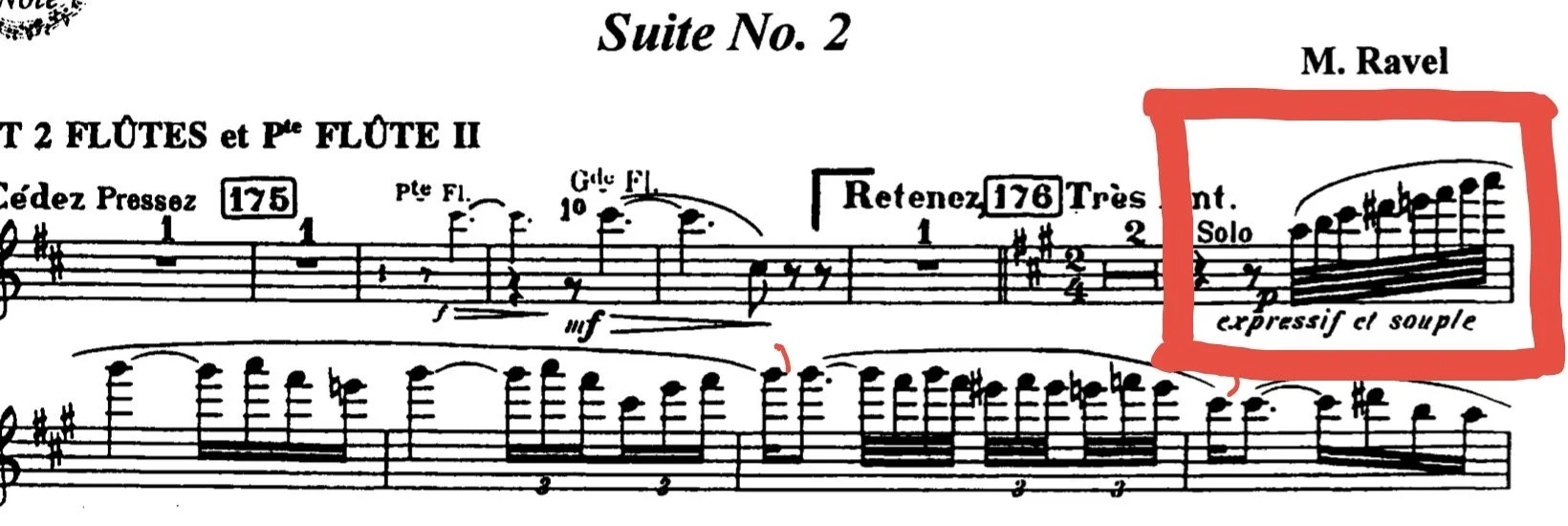
Did you know you don’t have to play the entire audition piece each time you practice? Or, in fact, start at the beginning each time you practice? Yes! In fact, it is very beneficial to identify the hardest spots in your piece and practice those separately, and, even better, start your practicing with those difficult spots! I really recommend putting those spots in a little box. Those are your practice boxes – you can start your practice with them, and try to play them as close to perfect as you can several times during your practice session.
7. Set a timer (so you are covering every piece each day)
When we have a really difficult piece (or spot in a piece) to practice, it can be tempting to want to spend all of our time on that one piece. Or, on the other hand, sometimes we spend all of our time on the piece which we enjoy the most, neglecting the others. However, for band auditions, we often have to prepare several pieces, as well as scales. In order to manage our time effectively and make sure we are covering everything, I recommend splitting your time up into equal chunks and setting a timer for practicing each section. As soon as the timer goes off, you must move to the next section.
8. Practice performing
This step is really important, once you get more secure in knowing your music. Oftentimes, when we are playing an audition, we get a little nervous–our heart beat speeds up, our hands get sweaty, our breathing gets shaky. And, if we are not used to that feeling, it can overwhelm us and make us lose our concentration, and, even if we could play really well at home, in this nervous state, we may make mistakes. That is why it is really important to practice playing under pressure in advance. You can ask your parents or friends to listen to you, or you can record yourself on your phone, to recreate that performance pressure. But one thing to remember, is when you are practicing performing, you must not stop if you make a mistake! Just keep going and do your best with the next section, and it’s quite possible nobody else will notice the mistake!
9. Get help from an experienced teacher
And finally, it is so incredibly beneficial to take lessons with an experienced teacher to prepare for your flute audition. Though the tips I have shared are definitely extremely useful, a teacher can help guide you in how you specifically can use those tips and how to structure your practice most effectively. They can listen to your playing and provide feedback in real time, which is the most valuable thing for your preparation.
I hope you find these tips useful and I wish you the best of luck in your next flute audition! Do you have more questions? I’d be happy to chat! Click below to sign up for a free video-call consultation with me.
